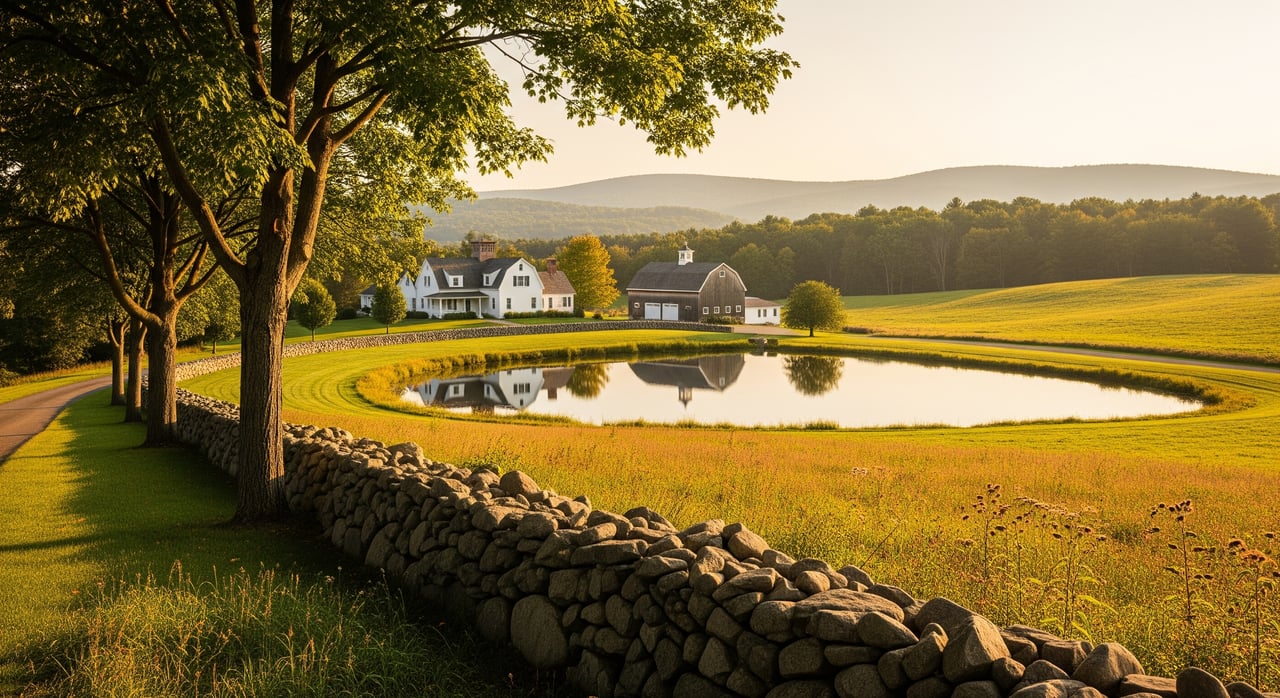
Two five-acre lots can be priced thousands apart. In a rural Berkshire market like New Marlborough, the difference usually comes down to what you can actually build, how hard it is to do it, and how the land feels when you stand on it. If you are buying, selling, or investing, understanding these drivers can help you price with confidence and avoid surprises. This guide breaks down the local factors that move land value and gives you a practical checklist to evaluate any parcel. Let’s dive in.
What drives land value here
Usable acreage and lot shape
Total acreage matters less than usable acreage. Steep slopes, wetlands, and restricted areas can shrink the buildable envelope. You want enough room for a house site, septic, well, driveway, and required setbacks without heavy earthwork. Narrow or irregular lots often carry a lower per-acre value because siting becomes harder.
Road frontage and access
Frontage on a public, town‑maintained road typically increases value and buyer confidence. Private ways and unaccepted roads can limit legal building rights, increase maintenance costs, and reduce mortgage options. Local zoning sets minimum frontage and where a driveway can go, so confirming road status is a critical first step.
Topography, soils, wetlands, drainage
Slope affects cost. Grades over 15 to 25 percent can add major expense for grading, retaining, and driveway construction, and may limit septic placement. Soil quality drives septic feasibility. Weak perc results or hydric soils can require engineered systems or make a lot unbuildable. Wetlands and floodplain designations reduce usable area and add buffer setbacks and permitting.
Utilities and connectivity
In New Marlborough, most parcels rely on private wells and on‑site septic. The presence of an existing well or septic, or the distance to utilities, can change both price and timeline. Internet and cellular service are increasingly important for remote workers and second‑home buyers, which can affect demand.
Views, privacy, and natural amenities
Clear, lasting views and proximity to lakes, trails, and cultural attractions often command premiums. Privacy and tree cover can add value for some buyers, but others prioritize open view corridors. The uniqueness of the view and whether it is likely to remain unobstructed matter.
Zoning, overlays, and permitted uses
Zoning dictates minimum lot size, frontage, setbacks, height, and permitted uses. Overlay districts, such as aquifer protection or scenic roads, can add standards or limits. Subdivision rules affect your ability to divide land and the cost to create new lots.
Legal status, survey, and easements
A recent boundary survey and clear title boost marketability and value. Recorded easements, rights of way, or conservation restrictions can limit development and lower price. Known, well‑documented conditions increase buyer confidence and ease financing.
Market context and financing
Demand from seasonal buyers, retirees, and remote workers influences pricing. Financing for raw land is tighter than for improved property, so lenders scrutinize buildability, access, and location. Property taxes and projected sitework costs feed directly into what buyers can afford.
Due diligence checklist for New Marlborough
Confirm zoning and buildability
- Review the New Marlborough zoning bylaw for minimum lot area, frontage, setbacks, and height.
- Ask the Building Inspector or Planning Board if the parcel meets the definition of a buildable lot.
- Check for overlay districts that add requirements.
Verify access and road status
- Confirm whether frontage is on a public, accepted town road or a private way.
- Contact the Highway Department about maintenance, driveway permits, and any required culvert work.
- If access is via a private way, obtain recorded easements and a maintenance agreement.
Evaluate soils, wetlands, and floodplains
- Request any existing soil reports or perc tests. If none, schedule a Title 5 perc with a licensed soil evaluator.
- Consult the Conservation Commission for wetland boundaries and any prior orders of conditions.
- Review floodplain data and preliminary soils mapping to spot constraints early.
Confirm utilities and services
- Ask local utility providers about electric and internet proximity and capacity.
- Confirm with the Board of Health whether the lot has an existing septic or well and what Title 5 standards apply.
- If municipal water or sewer is nearby, verify rules and costs for extensions.
Title, survey, and recorded encumbrances
- Order a recent title search from the Berkshire County Registry of Deeds to identify easements, rights of way, covenants, and restrictions.
- Commission a current boundary survey and a concept plan showing a potential house site, septic area, well location, utilities, and driveway.
Sitework costs and timeline
- Typical cost ranges in Berkshire County can include:
- Perc test: about $300 to $1,500.
- Septic design and permit: about $1,500 to $6,000, higher for engineered systems.
- Well drilling: about $5,000 to $15,000 based on depth and conditions.
- Boundary survey: $1,000 to $5,000 or more depending on acreage and complexity.
- Driveway construction: $5,000 to $50,000 or more, depending on length, slope, drainage, and ledge.
- Wetland delineation: $500 to $3,000.
- Allow weeks to months for perc testing, septic design, and Board of Health approval. Conservation review often takes 30 to 90 days, with more time for complex projects.
Taxes and history
- Review the assessor’s parcel card for assessed value and tax history.
- Check for municipal liens or code enforcement matters with the Town Clerk.
- Look at recent sales of similar parcels to ground expectations.
How these factors move price
- Buildable lot vs. paper lot: A lot that meets zoning, has septic feasibility, and safe driveway access commands a premium. A paper lot that fails frontage or septic requirements is often discounted or unsalable for residential use.
- Public road frontage vs. private way: Public road frontage usually raises price and liquidity. Private access may require maintenance agreements or improvements and can reduce the buyer pool.
- Wetlands or high water table: Significant wetlands or poor drainage reduce usable area and can trigger engineered septic systems and wider buffers, lowering per‑acre value.
- Views and recreation: Panoramic views or proximity to lakes and trails often increase demand and pricing. The premium depends on uniqueness and the likelihood that the view remains open.
- Conservation restrictions: These typically lower market value relative to unconstrained land and limit subdivision potential, even though some owners may pursue tax benefits.
- Encumbrances and title issues: Easements, boundary disputes, or missing surveys reduce lender appetite and suppress value. Clean title and surveys support stronger pricing.
Seller steps to maximize value
- Provide clarity. Obtain a recent boundary survey and mark corners. A simple concept plan showing a viable house site, septic area, and driveway route boosts buyer confidence.
- Document feasibility. If practical, commission a current perc test and septic feasibility report. Lots that feel “ready to build” sell faster and for more.
- Disclose early. Share known easements, restrictions, road status, and utility details in your property packet.
- Map constraints. If wetlands are present, a delineation and buildable envelope plan help position the lot accurately and reduce renegotiations.
Smart strategies for buyers and investors
- Focus on buildability first. Verify septic, well, driveway access, and setbacks before you fall in love with views.
- Use local offices. The Board of Health, Conservation Commission, Assessor, and Registry of Deeds provide authoritative records that prevent costly surprises.
- Budget soft and hard costs. Include permitting, engineering, driveway, grading, and possible ledge removal in your pro forma.
- Align with demand. Consider whether your end buyer is a seasonal owner, a remote worker, or a year‑round resident, and tailor your plan to that market.
Your next step
If you are evaluating land in New Marlborough, the most valuable immediate move is to confirm zoning and septic feasibility, then secure a current survey. From there, you can price confidently, structure smarter offers, or prepare your listing to capture the right buyers. For tailored advice and introductions to trusted local evaluators, surveyors, and engineers, connect with George Cain. Let’s Connect.
FAQs
What makes a lot “buildable” in New Marlborough?
- A lot that meets zoning standards for area, frontage, and setbacks, has viable septic and well locations, and has legal, safe driveway access is generally considered buildable by local officials.
How do perc tests affect land value for buyers?
- Strong perc results support a conventional septic, reduce risk, and often raise value, while failed or marginal perc results can require engineered systems or make the lot unsuitable, lowering price.
Is frontage on a private road a financing issue?
- It can be. Lenders often want public road frontage or, at minimum, recorded access rights and a road maintenance agreement for a private way before approving a land loan.
Do wetlands always prevent building on a parcel?
- Not always. Wetlands reduce usable area and add buffer setbacks and permitting, but a lot can still be buildable if there is a compliant building envelope and septic area outside protected zones.
What site preparation costs should I expect in Berkshire County?
- Typical ranges include $300 to $1,500 for perc testing, $1,500 to $6,000 for septic design and permits, $5,000 to $15,000 for a well, and $5,000 to $50,000 or more for a driveway, with timelines from weeks to several months for approvals.